Decrypto
A team word game by Thomas Dagenais-Lespérance, published by Le Scorpion Masqué. Two teams, one flat TV: the table screen is the public record, and every phone is a private one. Back to the table
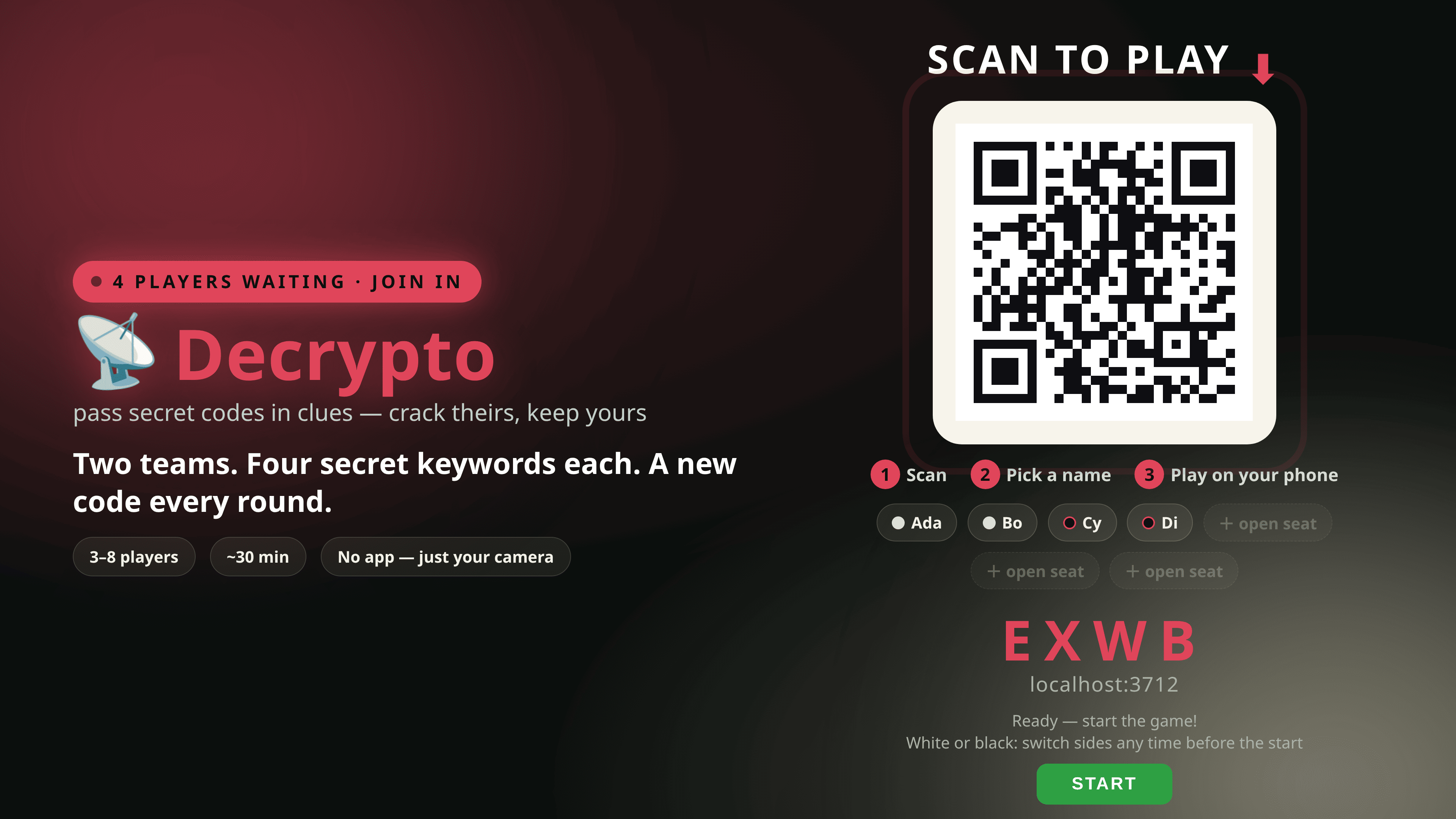
/tv?flat=1 for one join QR per team, black's upside down.)What each team holds
Your team has four secret keywords, numbered 1 to 4. They show only on your own team's phones, and they stay the same all game. The other team never sees them — that is the thing they spend the whole game trying to work out.
A round
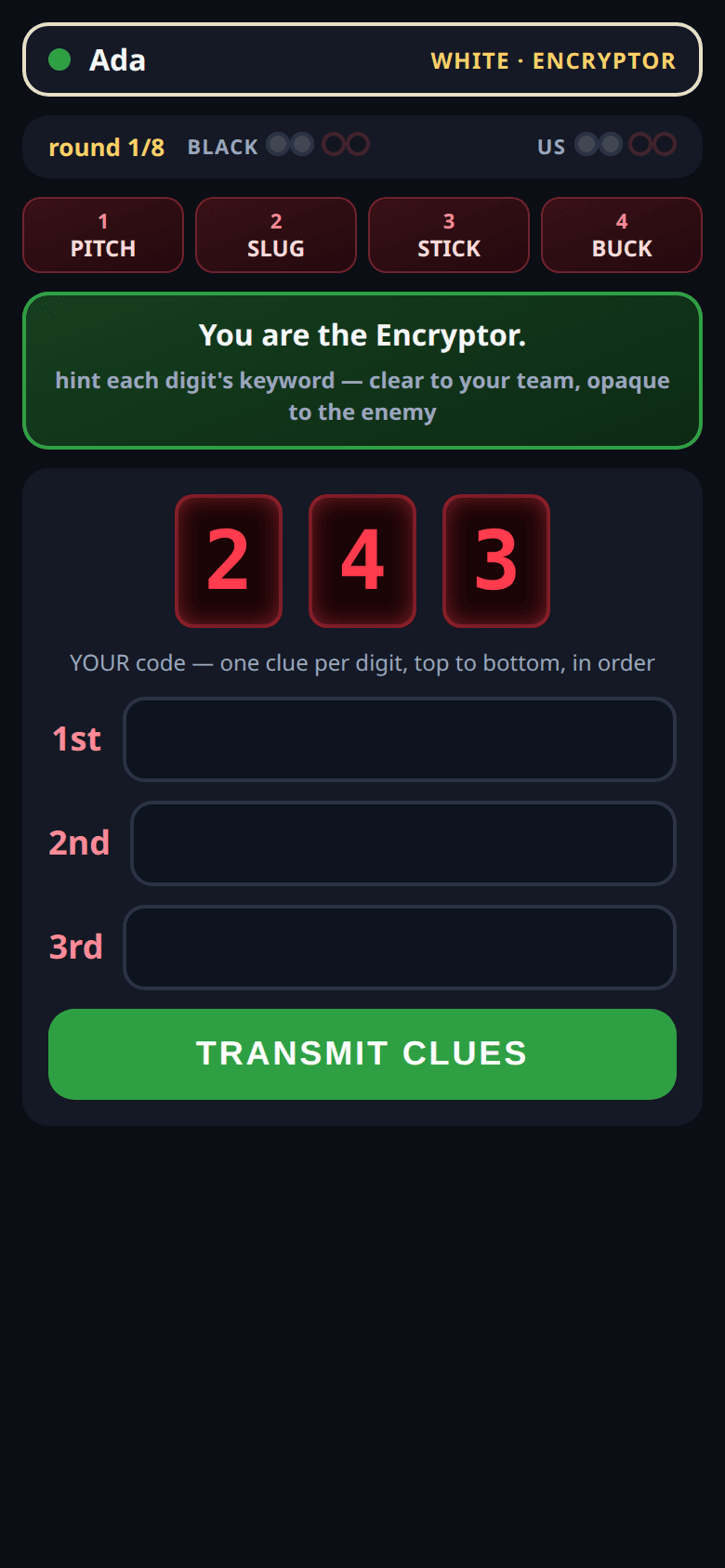
- The Encryptor gets a code. One player each round draws a secret three-digit code — three of your four keywords, in order, so 24 possible codes — and it appears on their phone alone. The chair round-robins, so everyone encrypts.
- They write three clues, one per digit. Free text, up to 40 characters. Both teams' Encryptors write at the same time, with a soft 30-second timer nagging the slower one.
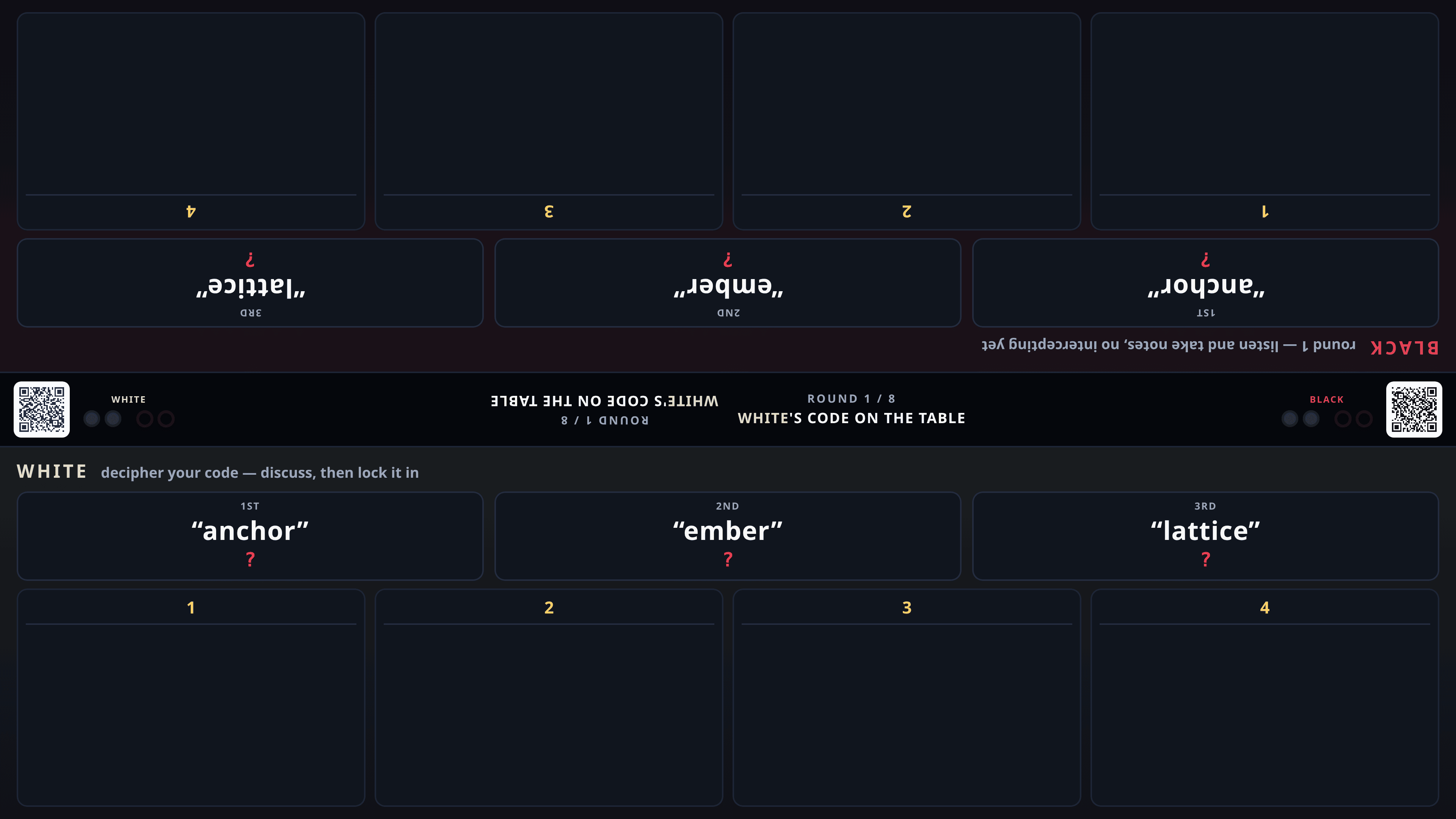
- Your team deciphers — what order were those keywords? The Encryptor may not help.
- The other team intercepts, guessing the same code from the same clues with none of the keywords. There is no interception in round one: they have not heard enough yet.
- The reveal. Both guesses lock before anything is shown, so nobody's digits leak early. White's clues resolve first, then black's.
Winning and losing
That tension is the whole design: a clue obvious enough for your team is a clue the opposition can read too, and a clue only you understand is how you hand them the game without their help.
A quiet game ends after round 8. Then it is decided on points (+1 per interception, −1 per miscommunication); if that ties, a keyword face-off — each team writes down what it thinks the other's four keywords are; and if that ties too, a shared victory.
What the table holds you to
- Never the same clue twice in a game, by your team.
- Never one of your own keywords as a clue.
- Everything softer — spelling references, position, how a word sounds — stays human-judged, exactly as it would at a real table. The app does not referee the interesting arguments.
Three players
With three, one player is the lone Interceptor against a pair. The pair has to hold out five rounds rather than eight, and the Interceptor still needs two interceptions to take it.